
The genetics of tom cat coat colours and patterns are extraordinarily advanced, and likewise come with one of the vital distinctive options within the animal kingdom, wherein the genes for the colours black and orange are situated at the X chromosome, relatively break away the remainder of the code for coat permutations, that are all situated on one area referred to as the KIT-gene. Those difficult interactions supply unending probabilities with regards to the tom cat look, however a contemporary discovery has published that there are nonetheless extra mixtures and hues to be explored, and shortly “salty liquorice” can be referred to as greater than only a candy and salty snack.
Over the last 20 years, an peculiar variant of the black and white coat colour has been rising inside a inhabitants of cats present in central Finland. An identical in look to a vintage tuxedo coat trend, this new variant had irregularities within the pigment distribution, making a finely mottled look of the fur that will ordinarily be forged black. This peculiar pigmentation has additionally been observed overlying different patterns, together with tabby, tortoiseshell, or diluted (blue) coats. As extra cats began to appear, a crew of researchers in Helsinki determined to take a more in-depth have a look at those fancy pussycats, and by way of shut, we imply on the molecular degree.
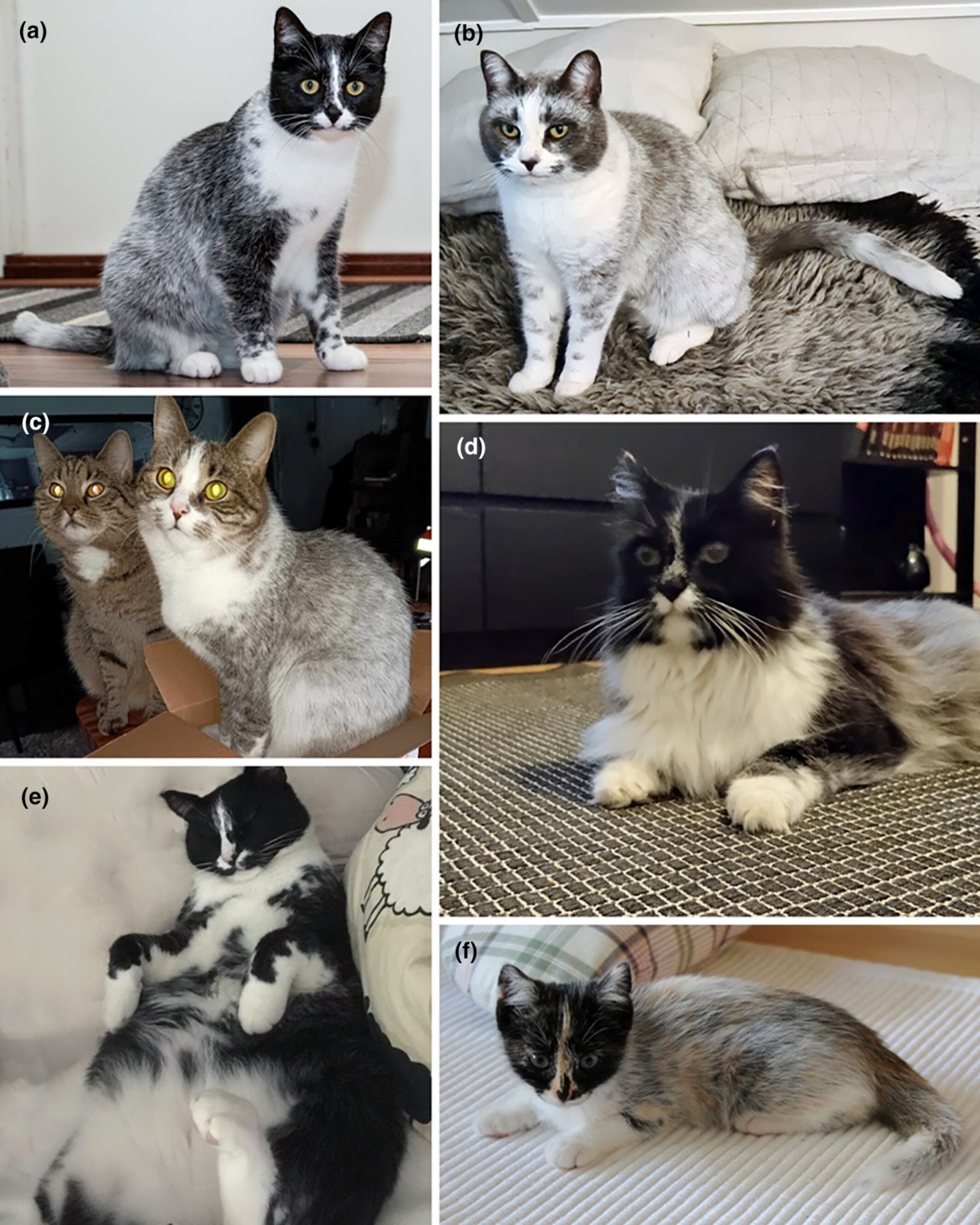 (a) Salmiak forged black cat (aa/wsalwsal)(b) salmiak forged blue cat (diluted black, aa/dd/wsalwsal)(c) salmiak brown mackerel tabby (wsalwsal) (proper) and his normal-colored brother heterozygous for salmiak (wsalw)(d) salmiak phenotype on a long-haired forged black cat (no longer genotyped)(e) salmiak forged black cat (aa/wsalwsal)(f) salmiak phenotype on a tortoiseshell cat (no longer genotyped)Photograph credit: (a) Ari Kankainen and (b–e) courtesy of the cat house owners
What researchers discovered when analyzing the KIT-gene of those mottled cats, affectionately labelled “Salmiak” after the preferred salty liquorice Nordic snack, was once that they possessed an absolutely new variant of the white (W) code. Having recognized the salmiak variant (Wsal), they have been then ready to find the similar genotype in non-salmiak cats, confirming that the salty liquorice trait is the results of a recessive gene, requiring two copies – one from every mother or father – to seem.
Regardless of the apparently unending permutations of tom cat coat look (phenotypes), there are in fact best 3 core colours at a genetic degree – black, orange, and white, with the latter extra appropriately categorized because the ‘absence of color’. The best way through which the ‘white’ gene is expressed (genotype) dictates how and the place pigment will or won’t seem. Other sunglasses of colours are created throughout the presence of a ‘dilution’ gene, whilst different gene permutations will decide how the pigment is expressed alongside every hair shaft. The genetics of tom cat coat colours isn’t simply condensed into the rest shorter than a textbook, however we have now incorporated an excessively transient abstract of a few key issues on the finish of the object, must you need to know a little bit extra.
All cats showing the salmiak markings have both yellow or inexperienced eyes, the commonest eye colours in cats. To start with, it was once theorized that the double Wsal genotype was once related to sterility; then again, the delivery of a muddle of kittens to a salmiak-coated cat disproved this speculation!
It’s most probably that as phrase spreads about those stunning pussycats that their reputation will build up. Then again, we might suggest warning prior to ordering your self a candy & salty cat, as there’s all the time an greater chance of heritable illness when selectively breeding people with recessive genes. At this degree, no explicit well being prerequisites were related to the salmiak look; then again, the inhabitants is just too small to attract any significant conclusions relating to conceivable related mutations.
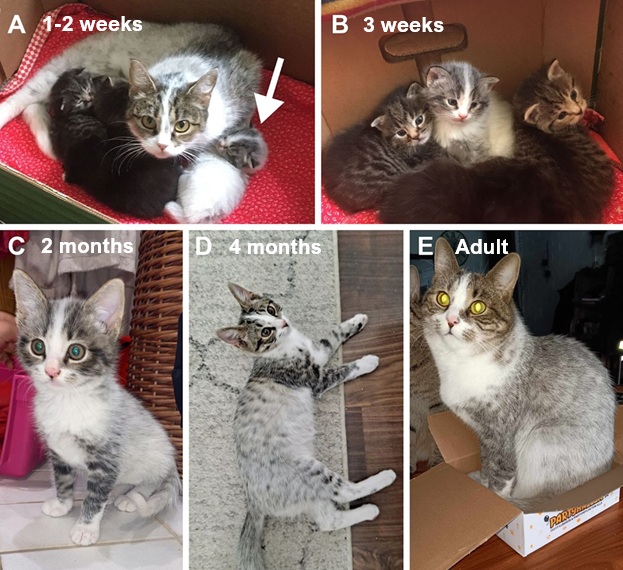 Supply – Anderson et al, 2024
The Genetics of Hepper Colours
Cats have two number one pigments: eumelanin (chargeable for black or brown colours), and pheomelanin (which produces crimson and yellow hues). After we have a look at the genetics at the back of coat colour permutations, every gene is outlined by way of two letters that constitute the type of the gene (alleles) from every mother or father. Those decide what trend and pigment their offspring can be. The dominant allele has a capital letter, whilst the recessive allele is proven in lowercase.
Brown (B/b/b’)
Determines eumelanin manufacturing. Cats with the dominant B allele could have black fur, whilst cats that inherit a double replica of the recessive b or b’ alleles will typically have chocolate (b/b or b/b’) or cinnamon (b’/b’) fur.
Orange (O)
Situated at the X (feminine) chromosome, which means that that male (XY) cats can both be orange or no longer, whilst women folk (XX) will also be orange, non-orange, or a mixture (tortoiseshell). It is a trait distinctive to cats and implies that, except for uncommon chromosomal abnormalities, all tortoiseshell cats are inherently feminine.
Dilution (D)
This impacts the depth or coloration of a colour. Cats with the D (dominant) allele have the protein melanophilin, which is what deposits pigment into the fur, leading to full-intensity colour. The recessive allele (d) of melanophilin’s presence ends up in the lightening of the colour, turning black into grey (aka blue), chocolate into lilac, cinnamon into fawn, and orange into cream.
White (WD) and White recognizing (Ws)
White isn’t in fact a colour, however the loss of colour, and WD will masks all different colours, leading to an absolutely white cat, however it’s other from albinism. The WD gene can be related to deafness. Cats with the Ws gene can vary from nearly utterly white to having only some white spots.
The genotype is the letter illustration of the trait – e.g., B/b
The phenotype is the outward look of that trait – e.g., black
Function Symbol Credit score: Ari Kankainen
Did You Know?
Our breaking information articles are featured in our weekly emails. Don’t fail to see the most recent and join our publication underneath!


